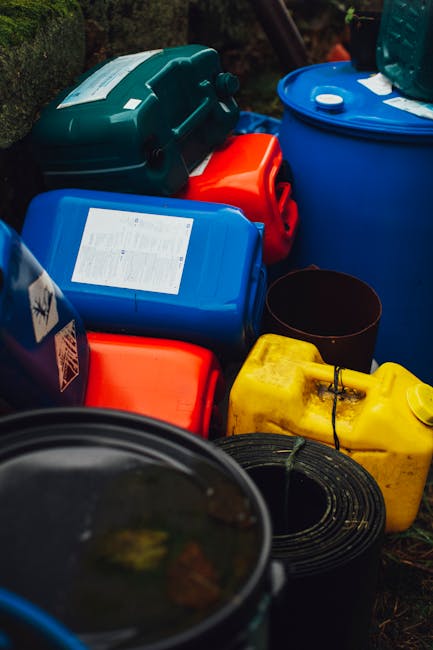
Greenwich council rules for waste and cleaning chemical disposal
If you clean homes, offices, or rental properties in Greenwich, waste and cleaning chemical disposal can become awkward fast. One minute you are mopping up after a deep clean; the next, you are left with half-used bottles, cloudy rinse water, and a nagging thought: can this go down the drain? That is exactly where Greenwich council rules for waste and cleaning chemical disposal matter. The aim is simple enough: protect people, drains, waterways, and waste workers while keeping your cleaning routine lawful and tidy.
In practice, this topic affects everyone from homeowners and landlords to professional cleaners and facilities teams. The details can feel fiddly, yes. But once you understand the logic behind the rules, the whole thing gets much easier to manage. In this guide, we will break down what matters, what usually causes problems, how to handle common cleaning products safely, and when to treat a liquid, cloth, or container as controlled waste rather than ordinary rubbish.
We will also cover useful habits that make compliance easier in real life, not just on paper. And because local cleaning work is rarely neat and tidy in the abstract, we will keep it practical. No drama, no waffle.
Why Greenwich council rules for waste and cleaning chemical disposal Matters
Cleaning chemicals are not just "household waste with a strong smell." Some are irritants, some are corrosive, and some can harm drains, soil, or aquatic environments if they are tipped out carelessly. Even seemingly ordinary products like bleach, descalers, oven cleaners, carpet shampoos, and disinfectants can become a disposal issue once they are no longer in use.
Greenwich council rules for waste and cleaning chemical disposal matter for three big reasons. First, they help prevent pollution. Second, they reduce risks to waste operatives and cleaning staff. Third, they stop people from accidentally using the wrong disposal route, which can lead to damage, mess, or a very unpleasant call from a landlord, managing agent, or site supervisor. Let's face it, nobody wants to explain a bleach spill in a shared bin store.
The practical side matters too. When you sort waste properly, you spend less time firefighting and more time getting the job done. If you run a cleaning business, that can be the difference between a smooth day and a headache-filled one. If you are a homeowner, it means fewer "what do I do with this?" moments at the end of a spring clean.
There is also a trust angle. Responsible disposal tells clients, tenants, and neighbours that you take safety seriously. That is why many professional teams build disposal habits into everyday cleaning routines rather than treating them as an afterthought. Our health and safety policy and recycling and sustainability approach reflect that kind of careful working practice.
How Greenwich council rules for waste and cleaning chemical disposal Works
At a basic level, the rules work by separating different types of waste into different routes. That means you do not lump everything together and hope for the best. You look at what the material is, how hazardous it is, and whether it can be reused, diluted safely, recycled, or must go to a special disposal route.
For most people, the decision starts with the product label and the condition of the waste. Is it an empty bottle with only residue left? Is it a half-full container of a strong solvent? Is it dirty wash water from mopping a floor? Is it a cloth saturated with chemicals? These are not the same thing, even if they all came from the same cleaning job.
In general terms, ordinary household cleaning waste can often be handled differently from hazardous or professional-grade chemicals. But that does not mean you can pour things down a sink by default. The safer approach is to check the product instructions, keep chemicals separate, and treat anything unknown as potentially risky until you have confirmed otherwise.
For cleaning businesses, the process is usually a little more structured. You should know what products are being used, where they are stored, which staff are handling them, and how waste is collected. If you are using a professional cleaning company or hiring cleaners, it is worth asking how they separate leftover product, packaging, and wastewater.
In real life, the rules feel less like one single "council rulebook" and more like a practical framework: identify, separate, contain, and dispose. That is the whole game.
Key Benefits and Practical Advantages
Following the right disposal practice gives you more than compliance. It makes the entire cleaning operation calmer and cleaner, oddly enough. The big wins are straightforward:
- Lower spill risk: sealed, labelled containers are far safer than loose bottles tossed into a mixed rubbish bag.
- Better drain protection: you reduce the chance of blocking pipes or releasing harmful residues into wastewater systems.
- Safer handling: staff and household members are less likely to come into contact with irritating or reactive substances.
- Cleaner storage areas: bin stores, cupboards, vans, and utility rooms stay more orderly.
- Stronger professional reputation: clients notice when a cleaner works neatly and responsibly.
There is a quieter benefit too: better decision-making. Once your team knows what to do with leftover chemicals, they stop improvising. That saves time, and it cuts down on those last-minute "should we just...?" conversations. Usually a bad sign, that phrase.
For businesses, good disposal practice can also support insurance expectations and internal safety procedures. If you are setting up a broader operational approach, the guidance in our insurance and safety information can be useful context.
Who This Is For and When It Makes Sense
This topic applies to a wider range of people than you might expect. It is not only for large commercial teams with industrial chemicals in the back room. In Greenwich, the practical audience usually includes:
- homeowners clearing out old cupboards after a deep clean
- tenants getting ready for end-of-tenancy handover
- landlords dealing with left-behind cleaning products
- office managers overseeing janitorial stores
- cleaning businesses using concentrated chemicals
- builders or decorators who also need post-job cleaning
- house clearance teams finding mixed household chemicals
It makes especially good sense to review the rules when you are doing a one-off clear-out, moving out of a property, or replacing old products with safer alternatives. It is also smart to check disposal habits after larger tasks such as deep cleaning, end of tenancy cleaning, or after builders cleaning, where there is often more residue, packaging, and contaminated cloths than usual.
If you clean regularly in kitchens, bathrooms, shared hallways, or commercial settings, you will notice the same pattern over and over: the cleaner the workflow, the easier disposal becomes. A little sorting at the start saves a lot of awkwardness at the end.
Step-by-Step Guidance
Here is a practical way to handle waste and cleaning chemical disposal without overcomplicating things.
- Identify the product. Read the label, not just the front. Look for hazard warnings, dilution advice, and any disposal instructions.
- Separate leftovers from packaging. Empty bottles, half-used containers, cloths, mop heads, and rinse water should not all be treated the same way.
- Check whether it is hazardous. If the product is corrosive, solvent-based, strongly acidic, or otherwise marked as hazardous, handle it more cautiously.
- Keep it contained. Use the original container where possible, or a suitable sealed container if the original is damaged.
- Do not mix chemicals. This sounds obvious, but in the middle of a busy clean, people do odd things. Bleach and acids do not belong together. Not ever.
- Decide on the disposal route. Recyclable packaging, general waste, and chemical waste may all need different handling.
- Document anything unusual. For businesses, it helps to note unusual items, spill incidents, or products that required specialist disposal.
- Store temporarily, if needed, in a safe place. Keep chemicals away from heat, food, children, and open drains while you arrange the next step.
If you are cleaning a property with a lot of waste, it can help to combine disposal planning with related tasks such as house clearance or one-off cleaning. That way the process is coordinated, not fragmented.
A simple rule of thumb
If you cannot confidently describe what the liquid or residue is, do not guess. Put it aside, keep it sealed, and treat it as potentially hazardous until you have checked.
Expert Tips for Better Results
A lot of disposal problems are preventable with a few habits that experienced cleaners build in early.
- Use less product in the first place. Overdosing chemicals creates more leftover waste and more rinsing.
- Choose concentrated products carefully. They reduce packaging, but only if staff dilute them properly and consistently.
- Label decanted containers immediately. "Clear liquid in an old bottle" is not enough. That is how mistakes start.
- Separate hazardous waste from paper and plastic waste. Contamination can spoil otherwise recyclable material.
- Keep a spill kit nearby. A small absorbent kit saves a lot of panic when something knocks over in a van or utility room.
- Train for the boring bits. People remember dramatic safety warnings, but the everyday stuff matters more: lids on, caps tight, bottles upright.
For office environments, these habits work especially well when paired with a tidy cleaning schedule and a designated storage area. If you are organising cleaning for a workplace, our office cleaning and office cleaners pages may also help you think through the wider setup.
One small but useful practice: keep a "what went out today" note in the cupboard or van. It sounds tiny. It is tiny. But it stops memory errors when staff change shifts or work different sites.
Common Mistakes to Avoid
Most bad disposal outcomes come from the same handful of habits. Nothing exotic. Just rushed decisions and a bit of wishful thinking.
- Pouring leftover chemicals down sinks or toilets. This is one of the most common mistakes, and it is rarely the best option.
- Mixing different products into one container. Never combine cleaners just to "save space."
- Throwing liquid waste into general rubbish. Bags can leak, split, or be damaged during handling.
- Leaving containers unlabelled. Future you will not be grateful.
- Assuming all empty bottles are safe as ordinary waste. Residue still matters.
- Forgetting contaminated cloths and pads. They may need separate handling if they are saturated with strong chemicals.
There is also a softer mistake: assuming "the council will just deal with it." That is not a disposal plan. It is a hope, and hope is a poor substitute for sorting waste properly.
When people are under time pressure, they also tend to ignore the labels on specialist products such as oven cleaners or heavy-duty descalers. If your work includes those tasks, it is worth following the same caution used in our oven cleaning and oven cleaner services, where residue control matters a great deal.
Tools, Resources and Recommendations
You do not need a warehouse full of equipment to dispose of cleaning waste sensibly. A few simple tools go a long way.
- Original product labels and safety data sheets: keep these accessible for professional products.
- Seal-able containers: useful for temporary storage of small leftovers.
- Colour-coded waste bags or tubs: help staff separate general waste, recyclable packaging, and contaminated materials.
- Absorbent pads or granules: good for small spill control.
- Basic PPE: gloves, eye protection, and suitable clothing where products are irritating or corrosive.
- Internal disposal log: a simple notebook or digital record is often enough.
For businesses, a written policy is one of the most practical resources you can have. It does not need to be complicated. It just needs to explain what happens with leftover chemicals, empty containers, contaminated cloths, and spill incidents. If you are building that kind of framework, a reputable cleaning company should be able to show clear operating standards.
For residents, the most useful resource is often a calm check of the product label and a little patience. That sounds almost too simple, but honestly, it works.
Law, Compliance, Standards, or Best Practice
This is the bit people often want translated into plain English. In the UK, chemical disposal is shaped by general waste law, environmental duties, workplace safety expectations, and the guidance issued by local authorities. The exact route can depend on the product, quantity, and setting, so it is wise to treat the council's practical guidance and the product label as your first checkpoints.
For household users, the safest approach is to keep cleaning chemicals separate from normal rubbish when they are still full, partly full, or clearly hazardous. For businesses, the expectation is stronger: you should have suitable storage, handling procedures, training, and waste segregation in place. That helps with safety, audit readiness, and day-to-day consistency.
Best practice usually means:
- following the product label and safety instructions
- keeping hazardous and non-hazardous waste separate
- preventing spillages and leaks during storage or transport
- using approved disposal routes for anything that cannot safely go in general waste
- training staff to recognise risky products and contaminated materials
If you work in a commercial environment, this matters just as much after routine cleans as after larger events like refurbishments or tenant moves. In a small team, one wrong bin decision can affect the whole room, the vehicle, or the site. A bit of structure goes a long way.
For additional reassurance, especially where safety procedures and liability are concerned, it can help to review business-facing pages such as terms and conditions and privacy policy, alongside your internal policies.
Options, Methods, or Comparison Table
Different waste streams call for different handling. The table below gives a simple comparison of common cleaning-related waste types and the usual approach. It is deliberately broad, because exact requirements can vary with the product and quantity.
| Waste type | Typical examples | Usual handling approach | Main caution |
|---|---|---|---|
| Empty packaging with minimal residue | Rinsed bottles, cardboard outer packs | Often recyclable or general waste depending on contamination | Do not recycle if still heavily contaminated |
| Leftover liquid cleaner | Half-used disinfectant, acid descaler, solvent-based product | May need hazardous waste handling or specialist disposal | Never assume it is safe to pour away |
| Contaminated cloths and pads | Mop heads, wipes, absorbents | Depends on product residue and level of contamination | Can leak or react if mixed together |
| Dirty rinse water | Water from mopping, equipment rinse water | May be acceptable in some cases, but not always | Check the product and concentration first |
| Mixed house-clearance chemicals | Unknown old cleaners, bleaches, aerosols | Often treated cautiously and separately | Unknown products should not be guessed at |
For many readers, the simplest option is not "which bin?" but "is this waste safe to mix with anything else?" If the answer is no, separate it. That alone prevents a surprising number of problems.
Case Study or Real-World Example
Picture a small rental flat in Greenwich after tenants move out on a wet Thursday afternoon. There is a half-used bleach bottle under the sink, an oven cleaner can in the cupboard, a bucket with grey rinse water, and three stained cloths near the washing machine. Nothing dramatic. Just the usual end-of-tenancy clutter.
A rushed approach would be to throw the cloths in the bin, tip the water away, and hope the bottles count as empty. A better approach is to sort everything before the final clean-up begins. The bleach and oven cleaner stay sealed and separate. The rinse water is checked against the product instructions before disposal. The cloths are treated as contaminated cleaning waste, not ordinary laundry. And the empty cardboard packaging is kept apart from chemical residue.
That small amount of sorting changes the whole tone of the job. There is less mess in the kitchen, less chance of leaks in transit, and no mystery bottle sitting around for the next person to deal with. A bit dull? Sure. But very effective.
We see the same pattern in family homes after a major declutter or in offices after a deep seasonal clean. The exact products differ, but the principle does not: keep questionable waste separate until you know what it is and how it should go.
Practical Checklist
Use this quick checklist before you dispose of any cleaning waste in Greenwich.
- Have I read the product label and checked for hazard warnings?
- Is the item empty, partly full, or contaminated?
- Have I kept liquids separate from packaging?
- Could this product react with anything else I am storing nearby?
- Do the cloths, pads, or mop heads contain strong chemical residue?
- Have I avoided pouring anything into sinks, drains, or toilets without checking?
- Is the container sealed and labelled clearly?
- Do I need a specialist disposal route for this item?
- Have I kept food, children, and pets away from the waste area?
- If I am unsure, have I paused instead of guessing?
That last one matters more than people think. Pause first. Decide second. Dispose third.
Get a free quote today and see how much you can save.
Conclusion
Greenwich council rules for waste and cleaning chemical disposal are really about sensible separation, safe storage, and using the right route for the right material. Once you strip away the jargon, the logic is straightforward: keep hazardous and ordinary waste apart, do not mix unknown products, and never treat leftover chemicals casually just because they came from a cleaning job.
For households, that means fewer mistakes and less clutter. For cleaning teams, it means better safety and smoother operations. For landlords, tenants, and office managers, it means fewer awkward surprises at handover. Truth be told, the calmest jobs are usually the ones where waste was handled properly from the start.
If you build the habit now, you will save yourself time later. And that is often the whole point, isn't it?
Frequently Asked Questions
Can I pour cleaning chemicals down the sink in Greenwich?
Not automatically. Some small amounts of diluted household cleaning water may be acceptable in certain cases, but leftover chemicals, strong products, and anything hazardous should not be tipped away without checking the label and disposal guidance first.
What should I do with half-full bottles of cleaner?
Keep them sealed, labelled, and separate from general waste. Do not mix them with other chemicals. If you are unsure whether the product is hazardous, treat it cautiously until you confirm the safest disposal route.
Are empty cleaning bottles recyclable?
Sometimes, but only if they are sufficiently empty and not heavily contaminated. A bottle with thick residue or reactive product left inside may not belong in normal recycling. Check the condition, not just the fact that it is "empty enough."
What about bleach?
Bleach needs careful handling. Never mix it with other cleaners, especially acids or ammonia-based products. For disposal, do not assume a drain is the right answer; follow the label and local guidance.
How should I dispose of oven cleaner or descaler?
These products can be stronger than everyday cleaners, so treat them as potentially hazardous unless the label clearly says otherwise. Keep them sealed and separate, and avoid pouring them into sinks or drains by default.
What do I do with dirty mop water after cleaning?
It depends on what was in the water. Lightly soiled water from a mild cleaner may be handled differently from water containing strong chemical residues. If the product is concentrated or hazardous, be cautious and check the instructions first.
Do cleaning cloths count as waste too?
Yes, especially if they are soaked with strong cleaning chemicals. Contaminated cloths, pads, and mop heads should be assessed separately from general dry rubbish or laundry.
What is the safest approach if I do not know what a product is?
Do not guess. Keep it sealed, isolate it from other waste, and treat it as potentially hazardous until you can identify it. Unknown products are where a lot of avoidable problems begin.
Do businesses need stricter disposal procedures than households?
Usually, yes. Businesses are expected to have more formal waste segregation, storage, and staff awareness. That is especially true for cleaning teams, office maintenance staff, and anyone handling chemicals regularly.
How can I reduce the amount of chemical waste I create?
Use the right dosage, choose products carefully, and avoid over-ordering. Better planning means fewer half-used bottles, less packaging, and less disposal stress at the end of the job.
Is there a difference between domestic and commercial cleaning waste?
Yes. Domestic waste is usually smaller in volume and simpler, while commercial waste often involves larger quantities, stronger products, and more need for records and separation. The basic principles are the same, but the control level is higher for businesses.
Should I keep records of what chemicals were thrown away?
For businesses, that is a very good idea. Even a simple internal log helps track unusual items, spill incidents, and disposal decisions. For households, a log is less necessary, but keeping product labels or noting what was used can still be helpful if there is any doubt later.